Blog—AUG 8, 2024
Employee Recognition Program: The Ultimate Guide & Examples

Employee recognition programs are designed to acknowledge and reward the dedication and hard work of team members, driving motivation and enhancing performance standards.
These structured systems allow businesses to recognise employees for their contributions, achievements, and exemplary performance, fostering a positive work culture and boosting morale, motivation, and engagement.
Definition of employee recognition program
An employee recognition program is a structured system implemented within an organisation to acknowledge and reward employees for their contributions, achievements, and exemplary performance. It is designed to foster a positive work culture, boost employee morale, motivation, and engagement, as well as reinforce desired behaviors and outcomes aligned with the organisation's goals and values. Recognising employees not only boosts individual performance but also strengthens team cohesion and organisational culture.
For further insights on maximising employee satisfaction and enhancing recognition programs, you can explore our blog post "Maximising Employee Satisfaction: Key Techniques."
Benefits of employee recognition system
Instituting a recognition system within an organisation yields a multitude of benefits that contribute to a thriving workplace culture and enhanced performance. By establishing a culture of recognition, where employees' contributions are regularly acknowledged and celebrated via recognition methods, organisations cultivate an environment where individuals feel valued and appreciated. This fosters a positive company culture characterised by mutual respect, teamwork, and collaboration.
When employees feel appreciated and recognised for their efforts, they are more likely to be motivated, engaged, and committed to delivering their best work. This is a great way to boost morale and job satisfaction but also leads to increased productivity, creativity, and innovation. Furthermore, a recognition system plays a crucial role in employee retention, as satisfied employees are less likely to seek opportunities elsewhere.
Beyond its internal benefits, a recognition system also enhances an organisation's employer brand, attracting top talent and positioning the company as an employer of choice. Indeed, prospective employees are attracted to organisations that recognise employees, knowing they'll be valued and appreciated for their contributions. By showcasing a culture that recognises and rewards talent, organisations not only retain talent from their current workforce but also new talents, ultimately fostering a dynamic and thriving environment where every individual feels recognised and valued. Thus, investing in a comprehensive recognition system not only enriches the current workforce but also ensures a steady influx of exceptional talent, propelling the organisation towards sustained growth and success.
To delve deeper into optimising talent acquisition strategies and enhancing employee onboarding processes, explore our article "Game-changing onboarding: Practices for 2023"

Type of recognition program
Part of the recognition strategy, there are different type of recognition programs:
-
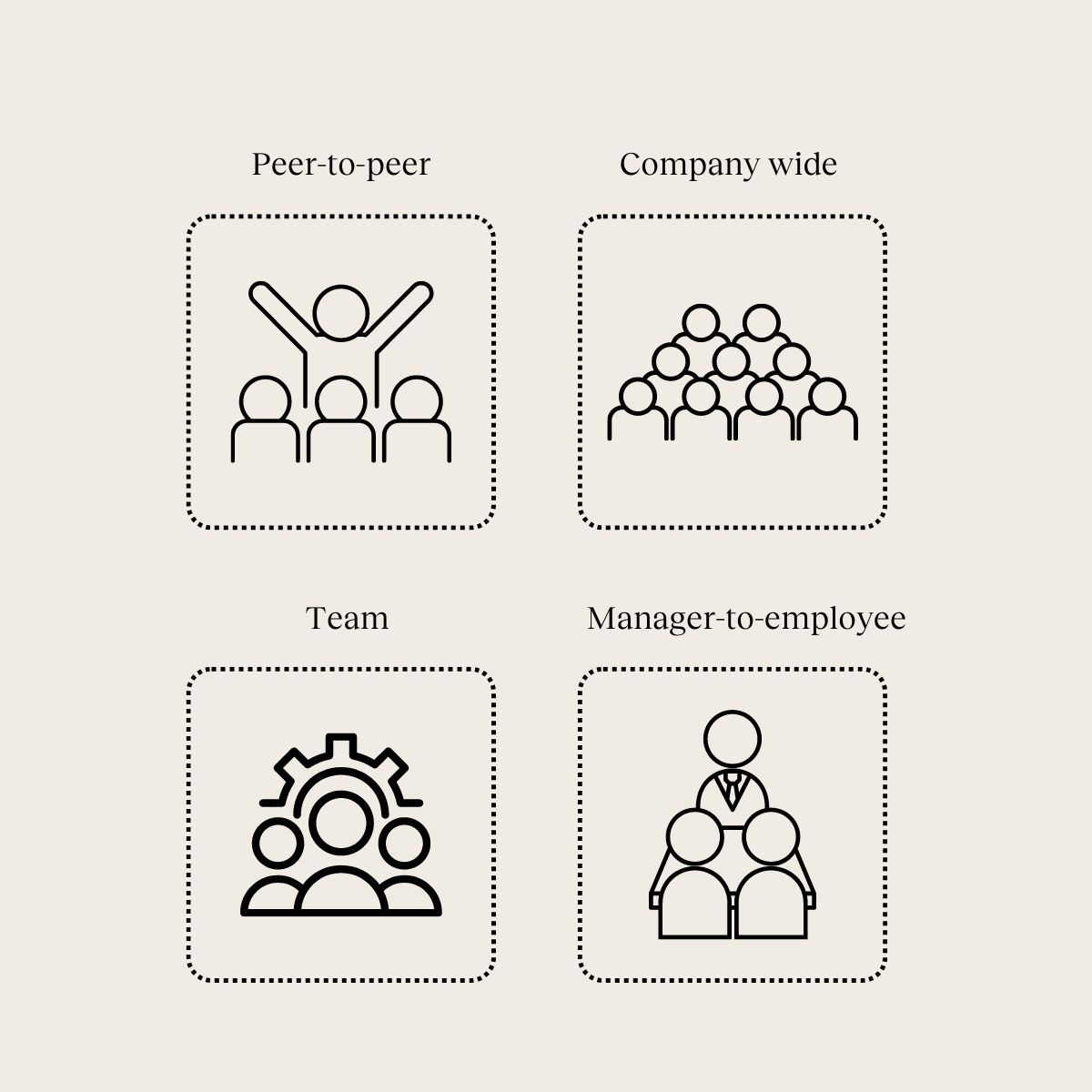
Peer-to-peer recognition programs: In this type of program, employees have the opportunity to recognise and appreciate their peers accomplishments and contributions. Peers can nominate each other for awards or simply express appreciation for a job well done. Peer-to-peer recognition fosters a supportive work environment and strengthens team cohesion.
-
Manager-to-Employee Recognition Program: This program involves managers or supervisors recognising and acknowledging the efforts and achievements of their direct reports. Managers may use various methods such as verbal praise, written commendations, or tangible rewards to show appreciation for employees' hard work and dedication. Manager-to-employee recognition programs help build positive relationships between managers and their teams and reinforce desired behaviors and performance standards.
-
Team Recognition Programs: Team recognition programs focus on celebrating the collective achievements and successes of a group or department. This could involve recognising teams that have achieved specific goals, exceeded performance targets, or demonstrated exceptional collaboration and teamwork. Team recognition programs promote a sense of unity, camaraderie, and employees accomplishments among team members.
-
Company-Wide Recognition Programs: Company-wide recognition programs are designed to acknowledge and reward outstanding contributions and achievements across the entire organisation. This type of program often includes awards ceremonies, public announcements, or special events to recognise individuals or teams for their exceptional performance, innovation, or contributions to the company's success. Company-wide recognition programs reinforce the company's values, company culture, and commitment to excellence on a broader scale.
Each type of recognition program plays a vital role in fostering a culture of appreciation, motivation, and engagement within the organisation. By recognising employees at various levels and across different teams, organisations can create a supportive and rewarding work environment that drives performance and contributes to overall success.
Simple but effective way to promote recognition
Organisations continually seek strategies to boost employee morale, enhance productivity, and foster positive work environments. One increasingly popular approach is implementing simple yet effective methods to promote recognition and appreciation among employees. Recognising the value of employee contributions not only drives motivation but also strengthens commitment towards organisational goals.
1. Employee Appreciation: Being appreciated for their efforts and hard work is a basic human need cherished by most employees. Showing appreciation for employees' everyday efforts communicates that their hard work is seen and valued by the organisation. Timely recognition reinforces the significance of employees' contributions and demonstrates that their efforts genuinely matter.
2. Driving Motivation: When employees feel recognised, they are motivated to maintain positive behaviors and exceed expectations. This encouragement inspires them to strive for better results and reinforces a culture of excellence within the organisation.
3. Increasing Commitment towards Business Goals: Recognising employees' efforts makes them feel valued and motivated to go the extra mile in achieving the organisation's objectives. This sense of appreciation fosters greater dedication and effort towards meeting business goals.
4. Fostering a Positive Work Environment: Well-established employee rewards and recognition programs cultivate an atmosphere of positivity and productivity. Such environments naturally inspire employees to give their utmost towards the advancement and prosperity of the organisation, fostering a culture of high performance, mutual respect, and innovation.
5. Implementing a Feedback Culture: Establishing a feedback culture is essential for fostering open communication and continuous improvement within an organisation. Organising regular feedback sessions provides employees with opportunities to share their thoughts on various aspects of the company, including the work environment, managerial support, and overall satisfaction. Recognising and appreciating employees who provide valuable feedback encourages a culture of constructive dialogue and mutual respect. Creating opportunities for peer-to-peer feedback and recognition reinforces collaboration and teamwork, empowering employees to support and acknowledge each other's contributions.
6. Differentiating Positive and Constructive Feedback: Fostering a robust feedback culture involves acknowledging positive contributions and providing constructive feedback when necessary. Positive feedback serves as reinforcement, encouraging employees to maintain excellent performance and strive for greater accomplishments. Conversely, constructive feedback, when delivered effectively, serves as a catalyst for growth and improvement, boosting employee motivation and creating a stronger drive to excel.
7. Encouraging Feedback to Managers: Encouraging feedback from employees to their managers is crucial for preventing the establishment of hierarchical systems that stifle communication. Providing employees with a safe space to express their opinions, concerns, and suggestions directly to their managers fosters a culture of open communication and mutual respect. Giving employees a voice in these sessions promotes transparency and empowers them to contribute to decision-making processes and organisational improvement initiatives, ultimately cultivating trust, strengthening relationships, and driving the organisation towards greater success.

Examples of employee recognitions
As organisations strive to foster a culture of appreciation and recognition among their employees, it becomes imperative to implement concrete strategies that highlight the value of individual contributions. In this section, we explore a variety of employee recognition program ideas aimed at celebrating achievements, commemorating milestones, and fostering a sense of belonging within the workplace. From acknowledging years of service to promoting health and well-being, these examples offer practical ways to express gratitude and reinforce positive behaviors among employees.
1. Years of Service Recognition: Recognising employees for their dedication and loyalty through commemorative awards, special acknowledgments, and personalised gifts for milestone years of service serves as a testament to their commitment to the organisation. Additionally, it's crucial to extend this recognition to retirees, celebrating their years of service and contributions to the company as they embark on a new chapter in their lives. For inspiration on meaningful retirement gifts, you can explore our blog post "Top Retirement Gifts Loved by Retirees: Celebrate Their New Chapter" link.
- Commemorative awards or certificates for milestone years of service (5, 10, 25, 30, 40, 50 years).
- Special acknowledgment during company meetings or events.
- Give flowers, a nice bottle or a personalised gifts to mark the occasion.
2. Employee Appreciation Events: Hosting events, having team-buildings, and themed celebrations not only strengthens bonds among team members but also provides opportunities for employees to unwind and enjoy each other's company outside of work.
- Annual appreciation dinners or luncheons or afterwork.
- Organise team-building activities such as go to a concert, sporting events, or cultural performances.
- Holiday parties or themed celebrations: Christmas, Carnaval, Saint-Nicolas, Women's rights day, ...
- Celebrate employees birthdays
**3. Small Tokens of Appreciation: **Gestures such as handwritten notes, well thought gifts, and surprise treats demonstrate genuine appreciation and can have a significant impact on employee morale and satisfaction.
- Handwritten thank-you notes from supervisors or peers. Or via the company internal tool
- Personalised gifts such as branded merchandise or company swag.
- Surprise treats like coffee vouchers, snack baskets, treats for everyone, ...

4. Social Recognition: Utilising social media platforms, newsletters, and team meetings to publicly acknowledge and spotlight employees' accomplishments fosters a sense of pride and recognition within the organisation.
- Public acknowledgment on company social media platforms.
- Employee spotlights in newsletters or internal communications.
- Shout-outs during team meetings or virtual gatherings.
5. Gift Giving: Tailoring thoughtful gifts or providing gift cards based on individual interests or preferences demonstrates a personalised approach to employee recognition and appreciation.
- Thoughtful gifts tailored to individual interests or hobbies.
- Gift cards to popular retailers, restaurants, or online stores.
- Subscription services for entertainment, wellness, or professional development.
To further enhance your employee recognition efforts and explore unique gift ideas tailored to your budget and preferences, you can refer to our blog posts "Top Corporate Gifts: Unique Finds Under 50€" or "Gifts for Remote Employees: Fostering Connection and Appreciation". These resources provide valuable insights into selecting meaningful gifts that strengthen connections and appreciation within your team.

6. Cash Rewards: Implementing monetary bonuses to reward exceptional performance and incentivise continued excellence among employees is a great idea.
- Monetary bonuses or performance-based incentives for a deserving employee
- Spot bonuses for exceptional contributions or achievements.
- Profit-sharing programs or profit-based incentives.
7. Time Off and Holidays: Offering additional vacation days, flexible work schedules, or company-wide shutdowns for holidays promotes work-life balance and shows consideration for employees' well-being outside of the workplace.
- Additional vacation days or extended holiday breaks.
- Flexible work schedules or compressed workweeks.
- Company-wide shutdowns or designated off-days for holidays, moving day, wedding day, ...
8. Promotion of Health and Well-being: Investing in organised sports activities, fitness classes, subsidised gym memberships, or encourage mental health underscores the organisation's commitment to supporting employees' holistic well-being.
- Organised sports activities or fitness classes for the whole company
- Subsidised gym memberships or wellness program incentives.
- Virtual wellness workshops or mindfulness sessions for remote workers.
By incorporating these diverse recognition ideas into an employee recognition program, organisations can effectively show appreciation for their employees' contributions and enhance overall morale, engagement, and performance.

How gift giving can help have a successful employee recognition programs?
Gift giving, particularly through personalised merchandise, plays a pivotal role in driving the success of a recognition program. At Merchery, we understand the significance of thoughtful and tailored gifts in acknowledging and appreciating employees' contributions. Personalised merchandise not only serves as tangible expressions of gratitude but also creates memorable experiences that foster a deeper connection between the recipient and the organisation. By offering customised gifts that reflect the individual preferences and interests of employees, companies can demonstrate their genuine appreciation and strengthen employee engagement and loyalty.
Additionally, personalised corporate gifts serves as powerful branding tools, reinforcing the company values and culture both within the organisation and beyond. Through strategic gift giving, organisations can enhance their recognition efforts, boost morale, and cultivate a positive and rewarding work environment, ultimately driving overall success and employee satisfaction. As a trusted partner in corporate gifting, we, at Merchery, are committed to helping organisations elevate their recognition programs with unique and meaningful gifts tailored to their specific needs and objectives.
Go have a look at our catalog of products for every taste & need (apparel, office, drinkware, home, brands, ...)
Conclusion
In conclusion, implementing an employee recognition program is vital for fostering a positive work culture and driving organisational success. By acknowledging and rewarding employee contributions, organisations can create an environment where individuals feel valued, motivated, and engaged.
To enhance recognition efforts, consider initiatives like employee engagement committees. For more on this topic, read our blog post "Understanding Employee Engagement Committees: Roles, Impact, and Best Practices".
Let's build a culture of appreciation and continuous improvement together with the help of employee recognition programs!